
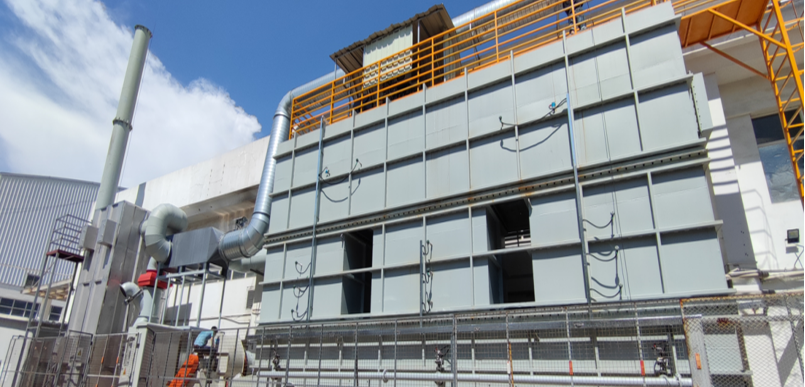
Brief Description and Working Principle Of RTO?
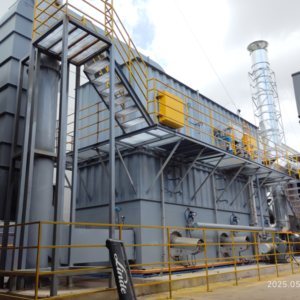
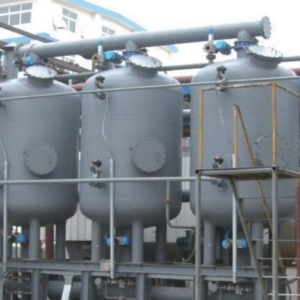
The regenerative oxidation incineration system heats organic exhaust gases to temperatures above 760°C, enabling the volatile organic compounds (VOCs) in the exhaust to be oxidized and decomposed into CO2 and H2O within the combustion chamber. The high-temperature gas generated by oxidation flows through specially designed ceramic regenera- tors, where the ceramic material heats up to store thermal energy. In the subsequent process, exhaust gases pass through the pre-heated ceramic layer, transferring its thermal energy to the gases. Organic pollutants are then transported through the ceramic medium as a heat exchanger carrier, enabling repeated heat exchange cycles. This design significantly reduces fuel consumption required for exhaust gas heating and lowers operational costs, achieving a remarkable heat recovery efficiency of 95%. Under medium-to- high concentration conditions, the Regenerative Thermal Oxidizer (RTO) can output residual heat in forms such as steam,hot air, or hot water, effectively meeting environmental standards while generating economic benefits.
The regenerative oxidation incineration system is primarily designed for scenarios with high concentrations of organic exhaust gases. It is also highly suitable for environments containing corrosive substances, toxic components to catalysts, and situations requiring elevated temperatures for oxidizing specific odors.
Product Features Of Regenerative Oxidation Incineration System (Three- Chamber RTO)
( 1) High-concentration exhaust gas treatment achieves self-heating combustion, resulting in low operating costs and reasonable cost- effectiveness.
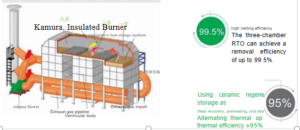
(2) The purification efficiency is high, with the three-chamber RTO achieving up to 99.5%.
(3) A ceramic regenerative thermal storage unit is employed for thermal energy recovery, operating in alternating cycles of preheat- ing and heat storage with a thermal efficiency ≥95%.
(4) The steel structure of the furnace body is robust, with a thick insulation layer, ensuring safe and reliable operation as well as high stability.
(5) PLC (Programmable Logic Controller) enables highly automated control with programmable automation capabilities.
(6) Waste heat utilization yields high economic benefits; excess thermal energy is reused in drying rooms, ovens, and similar equipment.
(7) The waste heat can be reused, causing no secondary and ensuring safety and environmental friendliness.
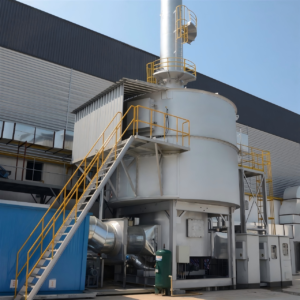
Applicable Industry
It can be widely used in industries such as petroleum, chemical, rubber, paint, coating, furniture, printed cans, printing, etc.for the purification and treatment of medium and high concentration organic waste gases. The types of organic substances that can be treated include benzene, ketones, esters, phenols, aldehydes, alcohols, ethers, and hydrocarbons.
Working Principle of Three-Cell RTO


Reviews
There are no reviews yet.