
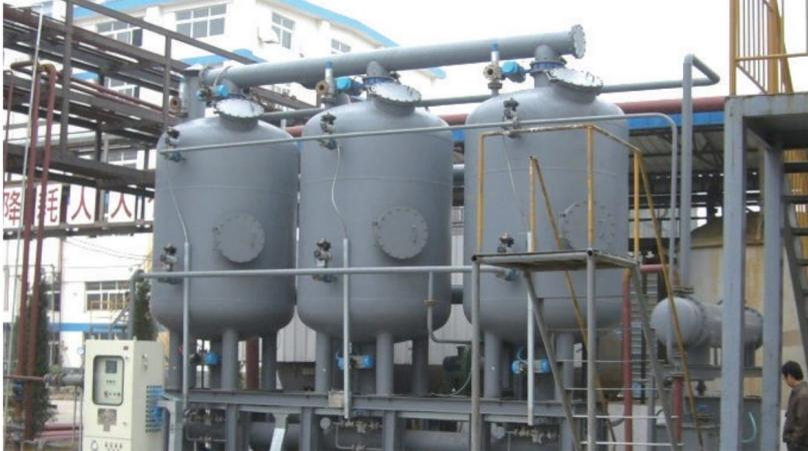
Activated Carbon Fiber Adsorption + Condensation Recovery for Exhaust Gas Treatment
Brief Description and Working Principle
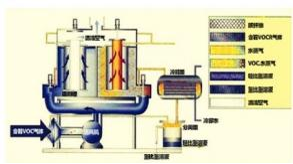
The condensation method for VOC recovery utilizes a condensation unit to generate low temperatures, thereby reducing the temperature of the VOC-containing air mixture. When the mixture enters the condensation unit, components with different dew point temperatures in the VOCs are sequentially condensed into liquid and separated. This technology is straightforward in implementation and operates based on the second law of thermodynamics. It achieves its goal by consuming mechanical energy to alter the state of the refrigerant, transferring heat from a cooler environment (or substance) to a warmer one during the refrigerant cycle. This process lowers the temperature of high- temperature substances (such as organic gases), causing their phase transition from vapor to liquid, thus converting VOC gases (e.g., fuel vapors or other gaseous organic compounds) into a liquid state for purification or recovery. The core components of mechanical refrigeration are the “four major elements”: the refrigeration compressor, evaporator, throttling device (expansion valve or capillary tube), and condenser (available with air-cooled or refrigerated designs). Mechanical refrigeration, also known as cycle refrigeration, generates cooling capacity through the refrigerant cycle process.
Types of Organic Compounds Recoverable by Con- densation Recovery Systems
( 1) Hydrocarbons:benzene, toluene, xylene, n-etane, solvent oil, naphtha, heavy aromatic hydrocarbons, hydrocarbon cleaning agents, etc.
(2) Halogenated hydrocarbons:trichloroethylene, perichloroethylene, trichloroeth- ane, dichloromethane, chlorobenzene, trichloroalkane, etc.
(3) Ketones:acetone, butanone, methyl isobutyl ketone, cyclohexanone, etc.
(4) Esters:ethyl acetate, butyl acetate, ethyl oleate, etc.
(5) Ethers:dioxahexane, THF, furfural, methyl solvents, etc.
(6) Alcohol:methanol, ethanol, isopropanol, butanol, etc.
(7) Polymerizable monomeric substances:vinyl chloride, acrylic acid, acrylic esters, styrene, vinyl acetate, etc.
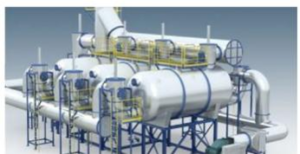
Applicable Industry
Petroleum chemical industry, fine chemical industry, spraying, packaging and printing, pharmaceutical and pesticide manufacturing, semiconductor and electronic product manufacturing, artificial board and wooden furniture manufacturing, leather, enameled wire, footwear manufacturing, coatings, inks, adhesives production, metal casting, etc.
Characteristics of activated carbon fiber adsorption + condensation recovery for waste gas treatment
( 1) The surface area provides extensive contact with exhaust gases, resulting in high effective adsorption capacity.
(2) Short adsorption and desorption processes with high speed, and low energy consumption for desorption and regeneration;
(3) Variable shape for easy use;
(4) FPCs with special properties can be manufactured as required.
(5) Good strength;
(6) It will not cause secondary pollution.
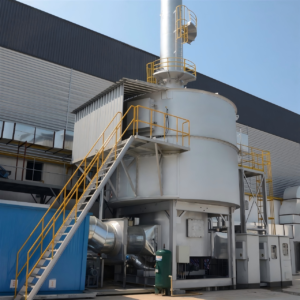
Our case:
Dongguan Huake Electronics Co., Ltd
| Production type | Manufacture various novel electronic components such as chip capacitors and resistors, sensing control assemblies, and related products |
|
Components of waste gas |
Formaldehyde, alcohols (ethanol, isopropanol, butanol, propanol), ketones (butanone), esters (ethyl acetate, butyl acetate), toluene, xylene, etc. |
| concentration | 90-300 mg/m ³ |
| air volume | 220000m³/h |
| Waste gas source process | Lamination, drying, printing, etc. |
| Waste gas characteristics | Contains dust and exhibits high viscosity (including lipid substances) |
| Treatment Technology | Pre-treatment + Filtration + Activated Carbon Fiber Adsorption + Condensation Recovery |
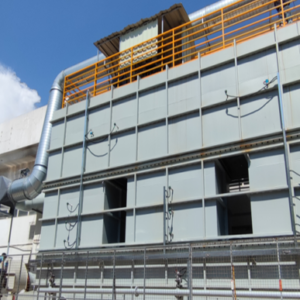

Reviews
There are no reviews yet.