
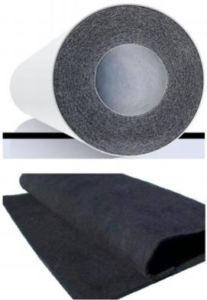
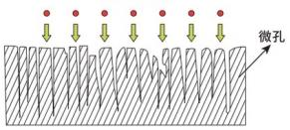
Activated Carbon Fiber Activated Carbon Fiber (ACF), also known as fibrous activated carbon, is a third-generation high-efficiency active adsorption material and environmental engineering material developed in the 1960s following powdered and granular activated carbon. Over 50% of its carbon atoms are distributed on the inner and outer surfaces, forming a unique adsorption structure that classifies it as a surface-based solid. Activated carbon fibers are produced through carbonization and activation of fibrous precursors. Composed of carbon, hydrogen, and oxygen elements with carbon as the primary component, these fibers exhibit carbon atoms arranged in graphite-like microcrystalline layers accounting for approximately 60% of the total structure. Oxygen-containing functional groups such as hydroxyl and ether groups constitute about 25%, while carbonyl, carboxyl, and ester groups make up around 1 0%. The material demonstrates exceptional specific surface area typically ranging from 1000 to 1600 m ²/g, featuring numerous micropores with diameters between 1 0μm and 40μ m that are narrowly and uniformly distributed, occupying approximately 90% of the total volume. The porous structure contains irregular heterocyclic configurations and surface functional groups, exhibiting high surface energy. This unique architecture creates a robust molecular field through interactions between micropores and pore walls, forming a high-pressure environment conducive to adsorbed molecules and chemical reactions.
Consequently, adsorbates diffuse to sites via shorter pathways than in conventional activated carbon, experience stronger driving forces, and exhibit concentrated pore size distribution—key factors contributing to ACF’s superior specific surface area, rapid adsorption/desorption rates, and high efficiency. Appropriate surface modification techniques can further alter the types and concentrations of chemical groups on ACF surfaces to optimize adsorption performance for specific substances. The fundamental properties of activated carbon fibers are determined by the physical and chemical characteristics of their precursor materials.
Seven Key Characteristics of Fiber Activated Carbon
(1) High adsorption capacity.
(2) High adsorption speed.
(3) Easy to regenerate and fast desorption rate.
(4) Excellent heat resistance.
(5) Acid-resistant and alkali-resistant, with good electrical conductivity and chemical stability.
(6) Ash water.
(7) Excellent formability, easily processed into forms such as felt, silk, fabric, and paper.
Applying Fields:
This system finds extensive applications in organic exhaust gas purification for painting and coating facilities across various industries including automotive, shipbuilding, motorcycle manufacturing, furniture production, bicycle manufacturing, home appliance manufacturing, piano production, and container manufacturing plants. It can also be integrated with assembly lines in footwear adhesive production, metal printing and can manufacturing, chemical and plastic industries, printing ink production, cable manufacturing, and enameled wire production, delivering effective exhaust gas treatment. Particularly suitable for treating large-volume, medium-to-low concentration organic emissions, it achieves optimal treatment outcomes and socio-economic benefits even for organic exhaust gases unsuitable for direct combustion, catalytic combustion, or adsorption recovery processes.
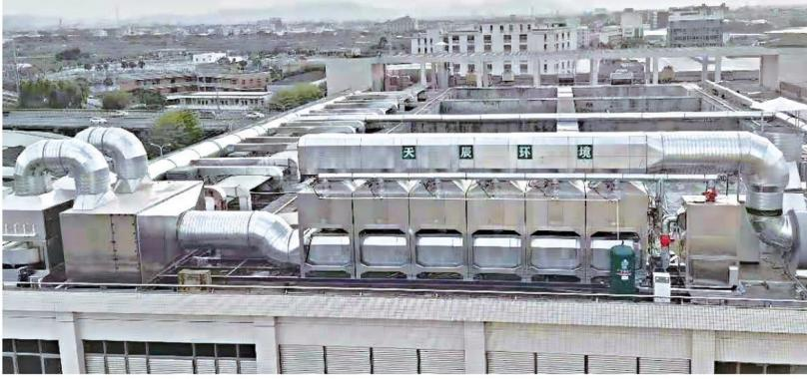
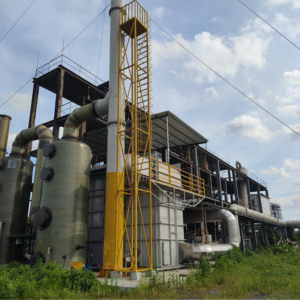
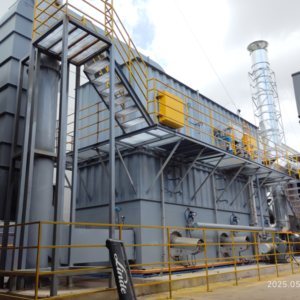
Case: Suzhou Qiangsu Gree Injection Molding Manufacturing Co., Ltd.
|
Household appliances such as water purifiers, kitchen three-piece sets, two-season products (fans, electric heaters, etc.), and four-season products (rice cookers, induction cooktops, electric kettles, etc.). |
|
| Main components of exhaust gases | Benzene, toluene, xylene, total non-methane hydrocarbons, etc. |
| concentration | 40-2300 mg/m ³ |
| air volume | 15000m³/h |
| Waste gas source process | Addition of materials, grinding, mixing, and packaging |
| Waste gas ch- aracteristics | High air volume, dust-containing, and highly viscous |
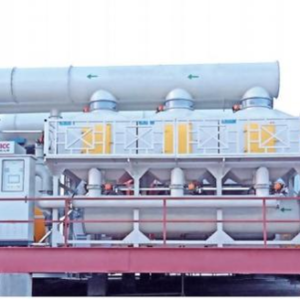
| Process technology | Pre-treatment + activated carbon fiber adsorption + CO |

Reviews
There are no reviews yet.