
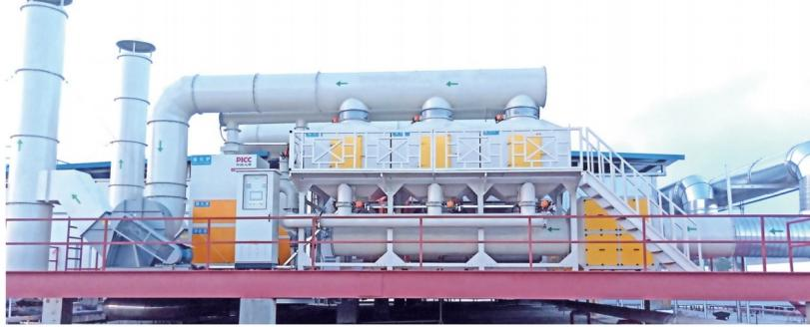
Definition of Catalytic Oxidation (CO)
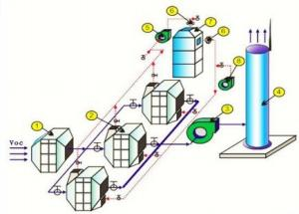
Catalytic combustion enables complete fuel com- bustion at lower temperatures, playing a crucial role in improving the combustion process, reducing reaction temperatures, promoting complete combustion, and inhibiting the formation of toxic and harmful substances. As an environmentally friendly process, its applications are continuously expanding and have been widely adopted in various aspects of industrial production and daily life. The CO process employs precious metal catalysts to reduce the activation energy required for the reaction between organic compounds in exhaust gases and O₂ , enabling complete oxidation of these compounds to CO₂ and H₂O at relatively low temperatures of 250-350°C—a flameless combustion process. The high-temperature oxidation gases are indirectly cooled and discharged through a heat exchanger, with a typical heat utilization efficiency of ≤75%. This method is widely used for treating high-concentration waste gases released during adsorbent regeneration, offering unique material proper- ties, stable performance, reliability, and operational simplicity.
Cellular Activated Carbon
Honeycomb activated carbon, refined through specialized formulations, is available in multiple varieties with customizable adsorption properties tailored to specific pollutants. The 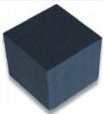 raw materials are mixed, pressed using custom molds, and then activated and fired at high temperatures. Characte- rized by a large specific surface area, low overall resistance, well- developed micropores, high adsorption capacity, and long service life, honeycomb activated carbon is widely used in air pollution control.
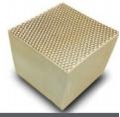 Catalyst
(1) The carrier subjected to high-temperature stabilization treatment exhibits high- temperature resistance and corrosion resist- ance, ensuring that the catalyst is not sintered and maintaining its stable specific surface area.
(2) A catalyst that is easy to clean, ensuring an exceptionally long service life;
(3) Highly dispersed precious metals;
(4) Low resistance, cost-effective operation;
Product Features
(1) With low ignition temperature and low energy consumption,combustion can easily reach stability, and even complete the oxidation reaction without external heat transfer after reaching the ignition temperature.
(2) High purification efficiency and low emission levels of pollutants (such as NOx and incomplete combustion products).
(3) It adapts to a wide range of oxygen concentrations, operates with low noise, no secondary pollution,and features gentle combustion, low operating costs, as well as convenient operation and management.
(4) User-friendly operation:The system is fully automated and controlled by a PLC throughout its operation.
(5) Low energy consumption:low electricity consumption, the catalytic combustion bed uses honeycomb-shaped precious metal catalysts with low resistance, and can maintain combustion when organic exhaust gas reaches above 2000ppm.
(6) Safe and reliable:The system is safe and reliable, equipped with multiple sets of temperature, pressure, and gas sensors and alarm devices, as well as safety protection measures such as flame arresters and explosion relief membranes.
(7) Flexible and simple structure:Featuring a modular design with a straightforward structure, the modular components are easy to manufacture and process, ensuring simple installation, compact footprint, and lightweight weight.
(8) High-tech:Using honeycomb activated carbon, compared with traditional granular activated carbon, it has advantages in thermodynamic performance, low resistance and low consumption, high performance, and is extremely suitable for large air volume waste gas treatment.
(9) Waste heat can be reused:Waste heat can be returned to the drying tunnel to reduce the consumption power in the original drying tunnel, or it can be used as a heat source in other places.
Our case:
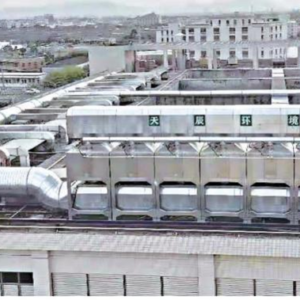
Dongguan Huajing Powder Metallurgy Co., Ltd.
| The company primarily manufactures smartphones, smart wearables, and 5G communication components. | |
| Main components of exhaust gases | Toluene, xylene, toluene isobutyl, methyl ketone, acetic acid, ethyl acetate isobutanol, trimethylbenzene, propylene glycol monomethyl ether, propanol, isobutyl ester, etc. |
| concentration | Approximately 200-300 mg/m ³ |
| air volume | 96000m³/h |
| field | Coating, drying |
| Waste gas characteristics | High air volume, low concentration |
| Technology | 72000m ³/h water washing + zeolite rotor + catalytic combustion 24000m ³/h water washing + activated carbon adsorption + catalytic combustion |

Reviews
There are no reviews yet.